Webhook and Queue Architecture in System Integrations
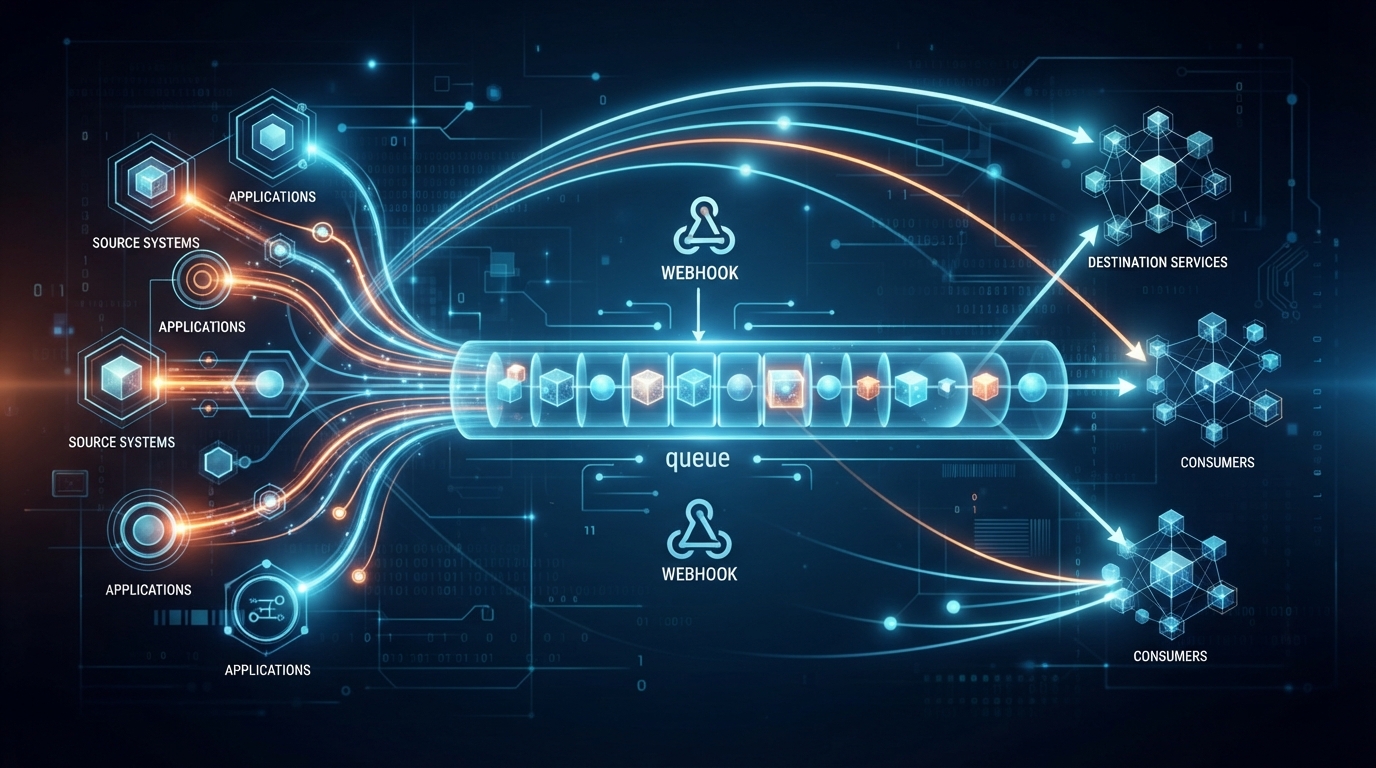
Asynchronous data flow design with webhook and queue architecture to overcome the problems caused by synchronous transfers in system integrations.
Introduction and Core Problems
In modern enterprise architectures, the seamless collaboration of different software applications is a critical requirement. To build a reliable bridge between the software utilized by businesses, System Integrations processes must be handled meticulously. Traditional synchronous data transfer methods can lead to problems such as timeouts and data inconsistencies during spikes in inter-system load. To eliminate these disadvantages, establishing asynchronous structures is essential.
Designing Webhook-Based Structures
Adopting an event-driven approach instead of synchronous request-response cycles directly improves system performance. Webhook mechanisms enable instant HTTP notifications to be sent to the target system when a specific event occurs within a source system (for example, when a new order is created or inventory is updated).
- Instant Triggering: Data is delivered to the target address via HTTP POST requests as soon as it is processed in the source system.
- Low Resource Consumption: It optimizes network and server resources by eliminating the cost of periodic data polling.
Asynchronous Data Flow with Queue Architecture
Webhook notifications and incoming high-volume data streams require an intermediary layer for the target system to handle instantaneous loads. Queue architecture holds incoming requests in a specific order, allowing them to be processed securely in the background.
- Load Balancing: During sudden traffic surges, incoming data accumulates in the queue and is consumed according to the target system's capacity.
- Asynchronous Data Flow: Data transfer continues in the background without blocking core business processes.
Error Management and Retry Mechanisms
Situations such as network outages or the temporary unavailability of the target system are inevitable during integration processes. A sustainable system integration is unthinkable without a robust error management strategy.
- Exponential Backoff: Failed requests are retried at specific, progressively increasing time intervals.
- Dead Letter Queue (DLQ): Erroneous data that cannot be processed despite multiple attempts is gathered in a separate queue for system administrators to review.
Conclusion
In ERP integration and similar critical data exchanges, webhook and queue-based approaches guarantee system stability. This technical infrastructure allows businesses to protect data integrity while also increasing operational efficiency.
Hypothetical Scenario: E-Commerce and ERP Integration
In this scenario, we examine the data flow between a high-volume order-receiving e-commerce platform and the central ERP system in the background. When a customer adds items to their cart and completes the payment, the e-commerce software triggers a webhook to transmit order details to the integration layer. Our target System Integrations architecture directly adds this sudden incoming HTTP request to the queue. Thus, the ERP system is not instantly locked up or flooded with requests.
Order data safely held in the queue is consumed at a rate matching the ERP's processing capacity and recorded in the database. The system maintains its stability even during heavy traffic fluctuations experienced in promotional periods. If the ERP database becomes temporarily inaccessible due to maintenance, the queue mechanism kicks in. Requests are not lost, and the system holds them securely. Once connectivity is restored, data flow resumes right where it left off, ensuring neither order loss nor a negative customer experience occurs.
Detailed Implementation and Integration Checklist
While bringing a successful and sustainable integration project to life, specific engineering steps must be completed thoroughly. First, cryptographic signatures (HMAC) should be used within the security layer to verify webhook requests and confirm that the incoming data originates from a genuinely trusted source. Second, correct asynchronous data flow policies must be established within the queue system—the backbone of the asynchronous structure—and concurrency limits for consumer services should be optimized.
In the third stage, error management scenarios must be meticulously mapped out. Incrementally increasing retry strategies should be defined for network outages, and the Dead Letter Queue mechanism should be activated for persistent errors. Finally, comprehensive logging and alerting mechanisms must be established for the traceability of all processes. Latency times, queue occupancy rates, and failed transaction statistics should be continuously monitored so that potential bottlenecks can be detected and addressed before they bring the system down.
Sources
- System Integrations — Cy Logic Software