Subcontracting Tracking and ERP Integration Guide in Manufacturing Enterprises
Tracking semi-finished products sent externally during the production process must be modeled with ERP systems to prevent stock inconsistencies and correctly manage cost accounting.
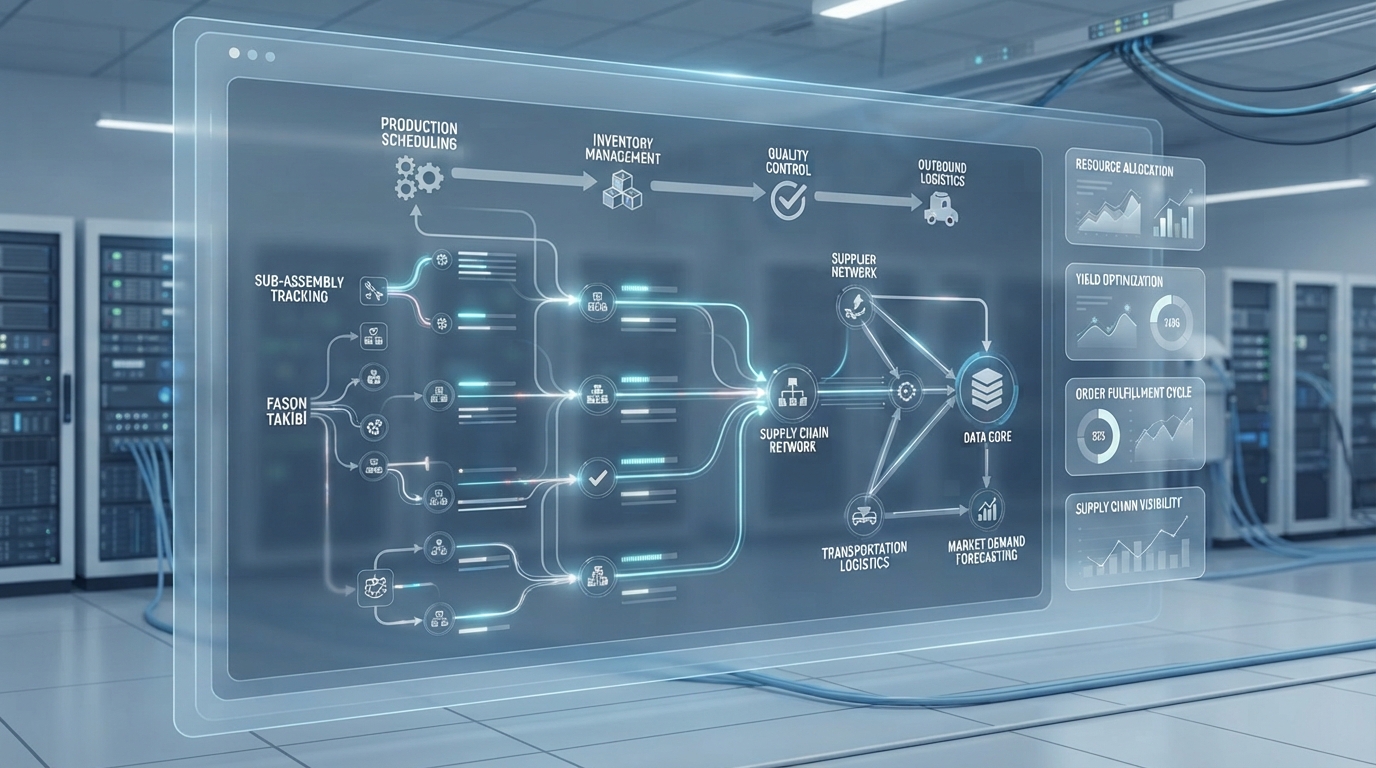
The management of outsourced operations in production processes is a critical engineering and control area for enterprises. The inability to track subcontracting processes in a digital environment lays the groundwork for serious inconsistencies during inventory management and errors in cost accounting calculations. In this technical guide, we will examine how subcontracting processes should be structured within enterprise systems.
Architectural Modeling of Subcontracting Processes
When an operation in the production line is outsourced, the movements of the part or material outside the enterprise must be tracked in real-time. Tracking performed through traditional methods compromises internal data integrity. Production ERP integration, which comes into play at this point, ensures that outsourced operations are synchronized with internal work orders.
Shipment and Dispatch Operations
The first step in terms of semi-finished product tracking is the stage of dispatching the material to the subcontractor. Every item sent from the enterprise to the subcontractor must be recorded using special dispatch note types and barcode systems. Correct definitions made at this stage clearly show which material is located with which contractor.
- Linking subcontracting dispatch notes to the work order
- Transfer of semi-finished product inventories to virtual subcontracting warehouses
- Pre-defining scrap and tolerance rates in the system
Return and Work Order Closure
The most sensitive point of subcontracting processes is the return of processed materials to the facility and the final quality control stage. Products coming from outside are matched with the relevant work order using Enterprise Software & ERP infrastructure. By processing the incoming quantity, scrap quantity, and labor cost into the system, the process is closed. Thus, the cost accounting module can accurately calculate the subcontractor service fee and raw material consumption.
Cost and Inventory Accuracy
Integrating subcontracting tracking operations into the system directly affects enterprises' overall cost analyses. The duration of the operation spent externally, transportation costs, and subcontracting labor fees must be reflected proportionally in the cost of the final product. Thanks to this integration, enterprises can transparently monitor their real-time inventory values and operational efficiencies.
Workflow Through a Hypothetical Scenario
In this scenario, we will examine how a medium-sized manufacturing facility operating in the field of metal processing manages the outsourced heat treatment process during the production of a complex gearbox. The production planning department decides to direct the heat treatment operation of the body part to an external supplier within the scope of the main work order. Along with the special subcontracting dispatch note created on the system, the relevant semi-finished product is deducted from the physical main warehouse and transferred to the virtual subcontracting warehouse location belonging to the supplier. At this stage, possible scrap rates and operational tolerances are pre-defined in the system. When the parts are processed at the subcontractor company and returned to the facility, they pass quality control approval and are offset against the main work order. If scrap exceeding acceptable tolerance limits has occurred during the process, the system automatically creates an additional scrap movement and alerts the cost accounting module. Thanks to this integrated flow, the enterprise can monitor the costs and delivery times of outsourced operations in real-time, thereby preventing potential bottlenecks and ensuring that production planning continues uninterrupted.
Application Checklist for Subcontracting ERP Integration
To set up subcontracting tracking processes flawlessly within enterprise systems, technical and operational steps must be completed fully. First, it must be ensured that supplier-based virtual warehouse definitions are correctly configured in the ERP infrastructure. Supporting dispatch and return note types with barcode integration will minimize manual data entry errors. Second, full integration of scrap and tolerance management into work orders is essential for cost accounting to perform accurate calculations. System administrators should establish automatic warning mechanisms against potential error situations such as network connection drops or data synchronization delays. Testing these processes using Enterprise Software & ERP solutions is a critical step prior to go-live. Finally, making supplier performance evaluation criteria reportable through the system supports the continuous improvement of outsourced management.
Resources
- Enterprise Software & ERP — Cy Logic Software