Cybersecurity Architecture in Retail: POS and Inventory Database Protection Guide
Explore cybersecurity approaches for POS devices, inventory databases, and API layers in retail businesses across Turkey and Northern Cyprus.
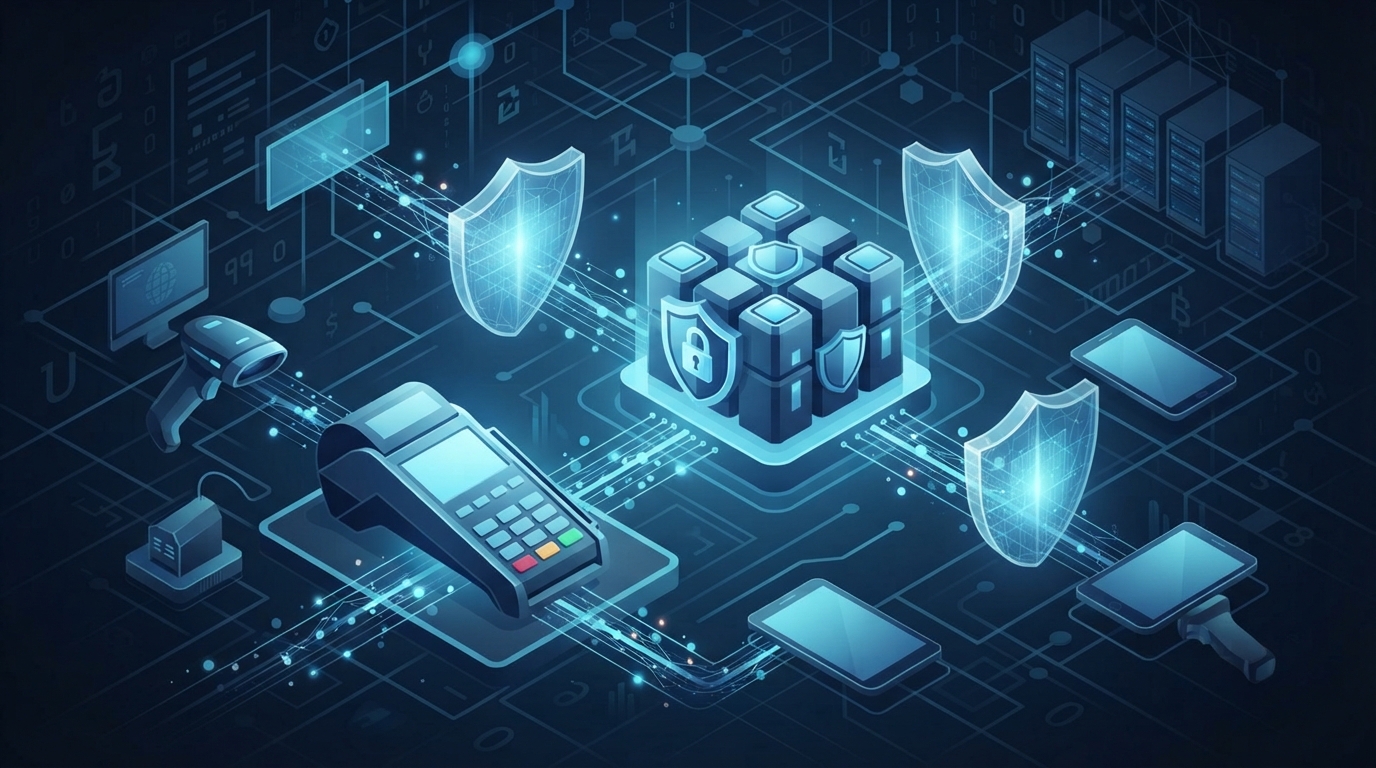
With digitalization processes, the retail sector operates across a vast technological network ranging from physical stores to e-commerce infrastructures and cloud-based inventory management systems. Businesses operating within the Turkish retail IT and Northern Cyprus retail ecosystem must adopt a comprehensive cybersecurity strategy to protect customer payment data and sensitive commercial records. This technical guide covers the necessary steps to ensure data flow security in retail architectures.
Risk Areas and Protection Strategies in Retail Architectures
The technology infrastructure of retail businesses consists of POS terminals, central ERP systems, inventory databases, and edge units connecting these systems. This complex structure may harbor vulnerabilities against external cyber threats.
To protect system integrity, focus must be placed on the following critical layers within the scope of Cybersecurity ::
- POS and Payment Systems: Encryption of in-store payment flows and ensuring end-to-end data security.
- Central Database: Strengthening authorization and access controls for the database where inventory and customer information are stored.
- Application Layer: Scanning e-commerce and mobile retail applications against external threats.
Secure Software Development at the API and Database Layer
Stores, warehouses, and central servers are in constant data exchange. This communication mostly takes place via interfaces (APIs). Therefore, API security plays a key role in preventing system-wide vulnerabilities.
In application and Cybersecurity processes, secure software development principles should be implemented through the following steps:
- Input Validation: Meticulous filtering of all data arriving at API endpoints on the server side.
- Authorization Matrix: Limiting each service and user to the minimum privilege level necessary to perform their job.
- Encryption Protocols: Encrypting sensitive data using industry-standard algorithms both in-transit and in areas where it is stored at-rest.
Continuous Monitoring and Auditing
Security in retail IT infrastructures cannot be a setup-and-forget structure. In Turkish retail IT and Northern Cyprus retail operations, Cybersecurity measures need to be tested regularly. Potential flaws can be identified before they are exploited through penetration tests and vulnerability scans.
Hypothetical Scenario: Real-World Attack Analysis in a Multi-Branch Chain Store
Let us assume that a retail chain with thirty branches operating across Turkey and Northern Cyprus performs instant inventory synchronization between the central ERP system and POS terminals in the stores. In this scenario, a malicious actor who manages to infiltrate the local network via an outdated POS terminal in a store attempts to access the central inventory database by exploiting an authorization flaw in the API gateway. In such an attack scenario, if network segmentation has not been applied, the attacker could encrypt the entire database to demand ransom or monitor credit card payment flows. The most critical trade-off in this scenario is the balance between speed and security; trying to keep latency to a minimum for instant data synchronization while disabling strong authentication mechanisms compromises system integrity. In terms of error management, when an unexpected query or unauthorized access attempt is detected at the database layer, the system should automatically isolate the network connection of the relevant edge unit and transmit an emergency alarm to the Cybersecurity operations center. This approach prevents a potential data breach from spreading across the entire retail network.
Retail Cybersecurity and Compliance Checklist
A comprehensive checklist must be followed to minimize risks in retail IT infrastructures and ensure operational continuity. First, all POS devices and payment gateway components should be configured with end-to-end encryption protocols, and default administrator passwords must be changed immediately. Second, token-based authentication should be made mandatory in API communication between central servers and cloud environments, and every request must pass through a strict input validation filter. In the third step, database access privileges of personnel and service accounts should be narrowed down in accordance with the principle of least privilege. Fourth, within the scope of Cybersecurity audits, regular penetration tests and vulnerability scans should be planned, and identified findings should be remediated quickly. In the fifth stage, all system logs should be collected in a central SIEM or log management tool to detect unusual movements through artificial intelligence-supported anomalies. The biggest commercial trade-off in implementing this checklist is balancing the license and maintenance costs brought by additional security software against the financial and reputational losses that a potential cyber attack would bring.
Sources
- Cybersecurity — Cy Logic Software