Comparison of REST API and GraphQL in System Integrations
Technical comparison of REST API and GraphQL architectures for data flow between enterprise software and a practical guide for business applications.
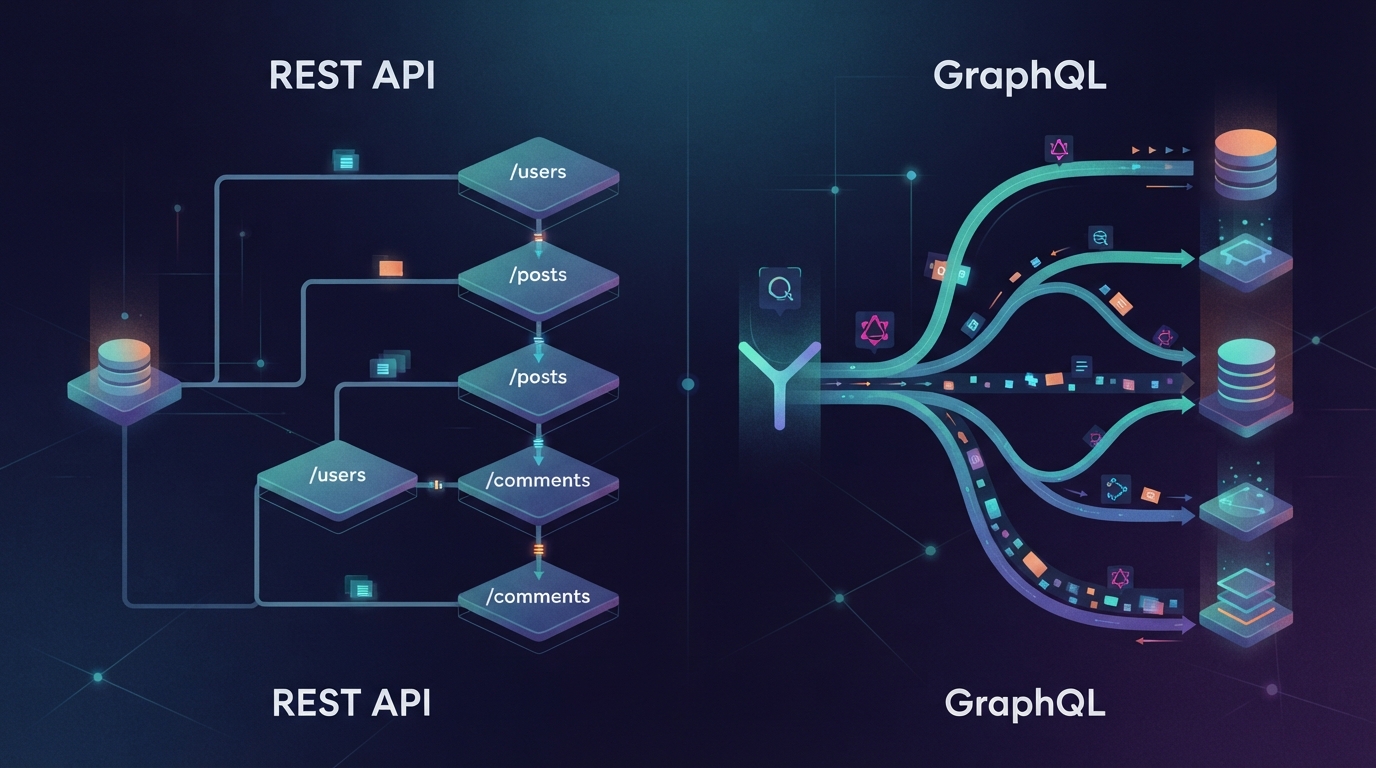
Ensuring reliable data flow between enterprise software and external systems forms the foundation of modern businesses' digital infrastructure. Communication between different modules or third-party services is possible by choosing the right API architecture. In this context, REST API and GraphQL, which are the two most preferred approaches in System Integrations processes, differ from each other with their architectural structures and data consumption formats.
REST API Architecture and Core Principles
The REST architecture offers resource-based communication using standard methods of the HTTP protocol. Each resource has a unique URI address, and the client performs data exchange through these addresses.
- Resource-Orientation: Each data group is represented by a separate endpoint.
- Caching: It directly benefits from the built-in caching mechanisms of the HTTP protocol.
- Static Payload: When a client makes a request to a specific endpoint from the server, it has to receive the entire data structure offered by that endpoint.
Flexible Data Querying with GraphQL
GraphQL offers an alternative where the client can precisely define the data it needs and query it through a single endpoint.
- Client-Driven Structure: The required fields are explicitly specified in the query, thereby preventing unnecessary data transfer.
- Single Endpoint: All operations are handled via a single URI, which can provide management ease in complex Data Flow scenarios.
- Type Safety: Thanks to schema definitions, the contract between the client and the server is strictly established.
Architectural Preferences and Comparison in Business Applications
When designing System Integrations in enterprise systems, the weaknesses and strengths of both technologies must be considered. ERP, accounting, payment, SMS, email, and third-party systems may have different payload requirements within the scope of System Integrations.
Payload and Performance
In REST API structures, making multiple HTTP requests may be necessary to access multiple related data. This creates an additional load in mobile scenarios or where bandwidth is limited. GraphQL, on the other hand, allows fetching nested data with a single query. Conversely, the complexity of GraphQL queries can create additional costs on the server side, and the use of standard HTTP caching tools requires more configuration.
Maintainability and Ease of Integration
Thanks to standardized HTTP status codes and widespread adoption, REST API is quickly embraced among teams. On the other hand, due to its flexible schema structure and the freedom granted to the client, GraphQL can increase maintainability in projects with constantly changing interface requirements. The right architectural choice should be made based on the organization's current technical infrastructure, the variety of services to be integrated, and performance expectations.
Hypothetical Scenario: Multi-Channel E-Commerce Integration
In this scenario, let us assume that a globally serving e-commerce platform is designing a new System Integrations layer for its mobile application and web interface. The platform brings together ERP, accounting, and warehouse management systems operating with a microservices architecture on the backend. When a user adds products to the cart via the mobile app and proceeds to payment steps, if the traditional REST API approach had been used, separate HTTP requests would need to be sent for product details, user information, campaign conditions, and shipping fees. This situation causes serious delays, especially on cellular data networks.
When GraphQL is preferred in the same scenario, the client transmits the exact fields it needs within a single POST request to the server, filtering them. On the server side, complex data is gathered at once and transferred to the mobile device. However, this flexibility comes at a price; poorly optimized deep GraphQL queries can cause excessive memory consumption on the server. In such error situations, analyzing query costs on the server side and introducing depth limitations is a critical trade-off. The correct System Integrations strategy must be built by observing this delicate balance between performance and flexibility.
Implementation and Integration Checklist
Before starting a new API project or transforming an existing architecture, there are fundamental steps that technical teams must consider. This checklist is designed to minimize potential disruptions that may be encountered during the System Integrations process.
- Requirement Analysis: Pre-determine the data needs and bandwidth constraints of consumer clients (mobile, web, IoT).
- Protocol Selection: Evaluate the REST architecture for simple CRUD operations and general services requiring caching, and the GraphQL alternative for situations requiring dynamic and nested data structures.
- Error Management and Logging: Completely configure standard HTTP error codes (4xx, 5xx) for REST; ensure that error messages do not leak sensitive system information in GraphQL projects.
- Security and Authorization: Strengthen endpoint security with JWT or OAuth2 token mechanisms; establish field-based authorization layers to prevent unauthorized field access in GraphQL queries.
- Performance Monitoring: Continuously monitor request durations, error rates, and load distribution using an API Gateway.
Sources
- System Integrations — Cy Logic Software