Multi-Branch and Department-Based Timesheet Consolidation Guide
Technical steps for optimizing timesheet consolidation, shift management, and payroll integration processes in multi-branch enterprises.
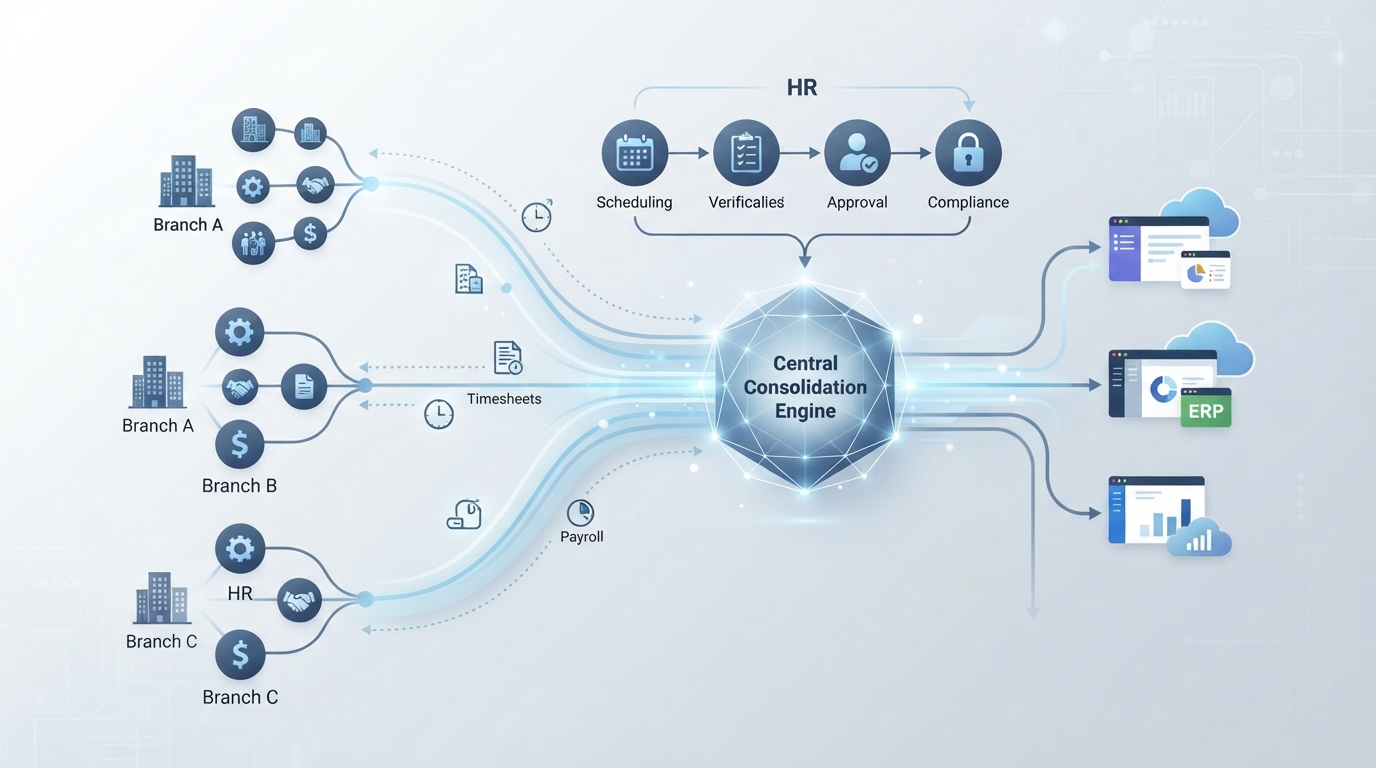
Managing human resources processes for businesses operating in multiple locations presents a complex structure. Collecting data from different branches and departments into a single center is of critical importance for operational efficiency. In this technical guide, we discuss how to structure timesheet consolidation processes.
Data Collection and Verification in a Multi-Branch Structure
Working hours, leave days, and overtime information of personnel working in different locations generally flow through separate channels. This situation lays the groundwork for data inconsistencies. The use of human resources software ensures the standardization of scattered data at this point. Raw data coming from branches must be automatically verified by the system.
Resolving Shift Complexity
When tracking departments with different shift schedules is carried out manually, the margin of error increases. Through shift management modules:
- Night, day, and weekend shifts are defined.
- Exceptional working hours are pre-filtered by the system.
- Personnel movements are monitored in real-time.
Timesheet Consolidation and Payroll Integration
Timesheet consolidation, which is the process of combining all collected data under one roof, directly affects the speed of periodic closures. Payroll integration is a vital step for sharing consolidated data with finance and accounting departments. A correctly structured integration minimizes human error and facilitates compliance with legal regulations. Reducing the operational burden, Human Resources & Timesheet solutions play a fundamental role in the digitalization of these processes.
Conclusion and Optimization Steps
Regardless of the number of branches your business has, standardizing data flow is the foundation of building a sustainable structure. Thanks to the right software infrastructure and integrated systems, payroll preparation times are shortened, and the management team can focus on strategic decisions.
Example Scenario: Timesheet Management Across Three Different Branches
In this scenario, the timesheet consolidation process of a retail chain operating in three different cities is examined. The head office is responsible for collecting the working hours data of employees in the Istanbul, Ankara, and Izmir branches. The Istanbul branch uses flexible hours, the Ankara branch uses a shift system, and the Izmir branch uses a weekend-heavy working model. At the beginning of the process, serious inconsistencies occurred because each branch entered data using its own local Excel files, and delays were observed in payroll calculations. To solve this problem, all branches were integrated into a centralized system, and biometric card readers were connected directly to the cloud-based infrastructure.
The biggest trade-off encountered during the implementation phase was between operational speed and data accuracy auditing. While branches demanded instant data flow, the human resources department requested additional time to verify the data. This trade-off was resolved by establishing automatic approval mechanisms. While overtime requests that did not exceed a certain tolerance limit were automatically approved by the system, records showing deviations fell to the manager's approval. Within the scope of error management, it was ensured that data was stored locally in cases such as connection loss and synchronized to the center when the connection was restored. Thus, data loss was prevented, and the periodic closing time was halved.
Implementation Checklist for Successful Consolidation
To perform error-free timesheet consolidation in multi-branch structures, certain steps must be taken completely. First, the hardware and software used in all locations must be standardized. API-based integrations must be tested, and security protocols must be reviewed to gather different data formats under one roof. An authorization matrix must be created where human resources and accounting teams can work together.
In the second stage of the checklist, exceptional cases and error scenarios are addressed. System administrators must meticulously follow the following steps:
- Schema compatibility of raw data coming from all branches must be audited regularly.
- Daily automatic warning mechanisms must be activated for shift conflicts and missing card swipe situations.
- Legal regulation changes must be reflected in payroll parameters in a timely manner.
- Backup and recovery scenarios against potential database outages must be tested with drills.
- System usage training for branch managers must be repeated periodically.
The complete implementation of these steps minimizes risks in the consolidation process while guaranteeing the establishment of a transparent and auditable human resources infrastructure throughout the company.
Sources
- Human Resources & Timesheet — Cy Logic Software