MRP and ERP Integration in Manufacturing Enterprises: Architectural Solutions
Technical solutions for stock and bill of materials management problems experienced in the integration of MRP processes with enterprise software in manufacturing businesses.
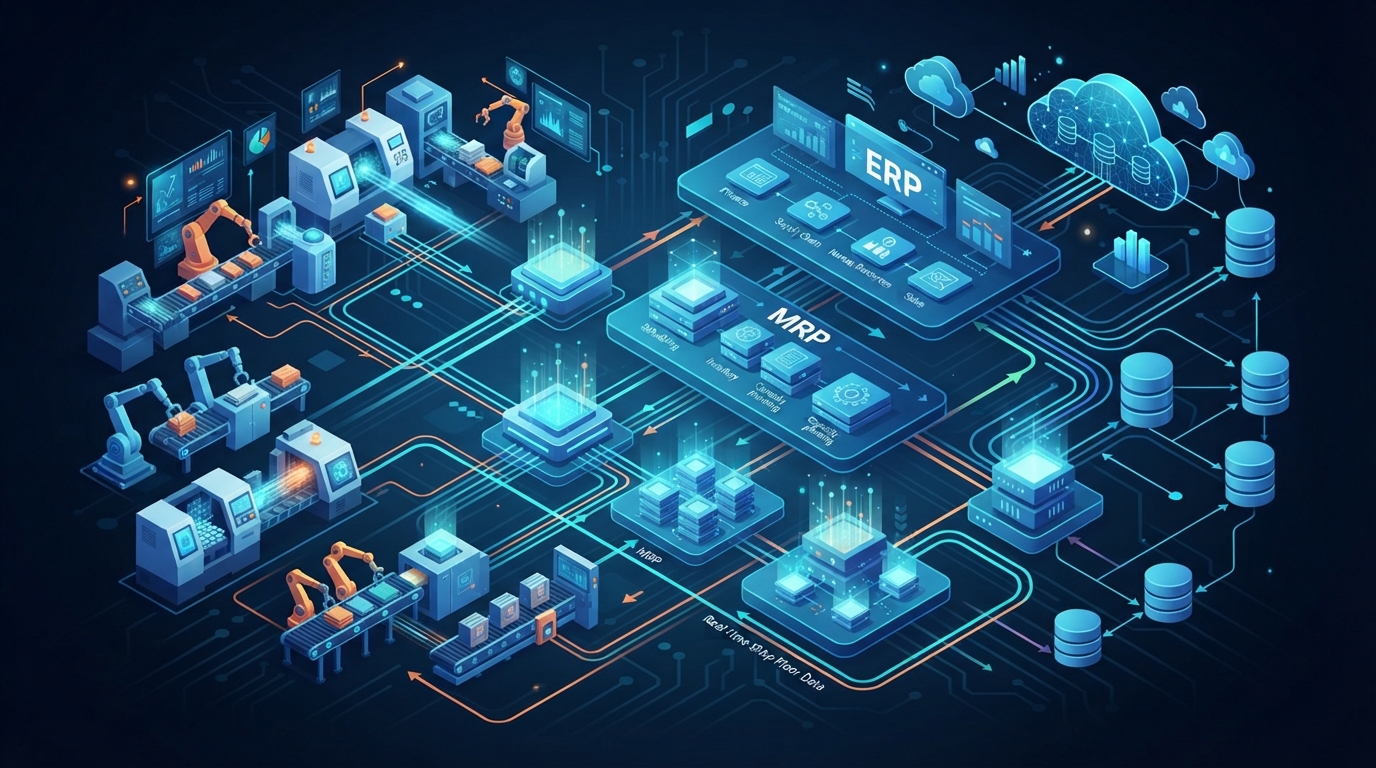
The Importance of MRP and ERP Integration in Manufacturing Enterprises
For manufacturing businesses to maintain their competitive power, transferring operational processes flawlessly to the digital environment is essential. When Material Requirements Planning and general enterprise process management are executed via Enterprise Software & ERP infrastructures, operational efficiency increases. However, choosing the right architectural approaches during this integration process is of critical importance.
Common Mistakes and Data Inconsistencies
One of the biggest challenges encountered during the integration phase is data disconnects between departments. Inventory deviations, faulty Bill of Materials (BOM) versioning, and capacity planning bottlenecks can lead to production line downtime and financial losses. Systems relying particularly on manual data entry generate misleading results in Material Requirements Planning calculations.
Step-by-Step Architectural Optimization Solutions
To eliminate such problems, the technical steps to be followed in the Enterprise Software & ERP ecosystem are as follows:
- Centralized Database Architecture: It must be ensured that all departments consume the same up-to-date data. Inventory Integration must be synchronized instantly with finance and production modules.
- Version Control Mechanisms: Recipe changes must be reflected in the system instantly, preventing old and new recipes from conflicting.
- Automatic Triggers: Automatic alert mechanisms must be established at critical inventory levels and during Production Planning processes.
Conclusion
A properly structured Enterprise Software & ERP infrastructure eliminates blind spots in businesses' Production Planning processes. It prepares a transparent, measurable, and error-free operational ground for decision-makers.
Sample Scenario: Integration Application for Automotive Sub-Industry
Let us consider a hypothetical automotive sub-industry business. This business performs the production of small metal parts numbering in the millions weekly. Thickness or alloy changes in raw material coils used on the production line directly affect Bill of Materials (BOM) versions. In Material Requirements Planning calculations made with traditional methods, a minor recipe update made by the engineering department was reflected in the ERP system hours later, and this delay caused the production of thousands of faulty products. To solve this problem, an event-driven architecture was designed on the Enterprise Software & ERP infrastructure. As soon as a BOM revision is made in the engineering system, the integration layer steps in and triggers the MRP calculation engine instantly. Thus, the system automatically stops ordering raw materials according to the old recipe and sends an instant alert to the supply chain team. Thanks to this architectural approach, inventory deviations decreased by ninety percent, while raw material waste was also prevented. However, the biggest technical trade-off brought by instant data synchronization is the increase in network traffic and server load. Thousands of transactions running simultaneously during heavy shift hours can lead to database locks. To manage such error situations, queue mechanisms and asynchronous data processing protocols were put into play, guaranteeing system stability.
Detailed Implementation Checklist
The steps that technical teams must meticulously follow to flawlessly complete the integration of Material Requirements Planning and enterprise systems in manufacturing businesses are as follows:
- Data Cleaning and Standardization: Before integration, all inventory codes, unit definitions, and material cards must be unified, and duplicate records must be cleaned.
- API and Webhook Configuration: Secure endpoints must be designed so that communication between systems takes place with instant triggers without the need for synchronous interventions.
- Stress and Load Tests: System capacity must be tested at its edge limits to simulate data fluctuations that may occur during heavy production periods.
- Error Management and Logging: In order to prevent data loss during integration disruptions, an error queue holding failed transactions and an automatic retry mechanism must be established.
- User Authorization Matrix: Roles that can modify recipe and inventory data within Enterprise Software & ERP must be clearly bounded.
The flawless implementation of this checklist will minimize technical risks in the integration process while preventing potential data inconsistencies.
Sources
- Enterprise Software & ERP — Cy Logic Software