In-Room Smart Displays and Guest Portal Integration in Hospitality
Transformation of in-room displays into modern guest portals and their integration with hotel management systems in tourism businesses.
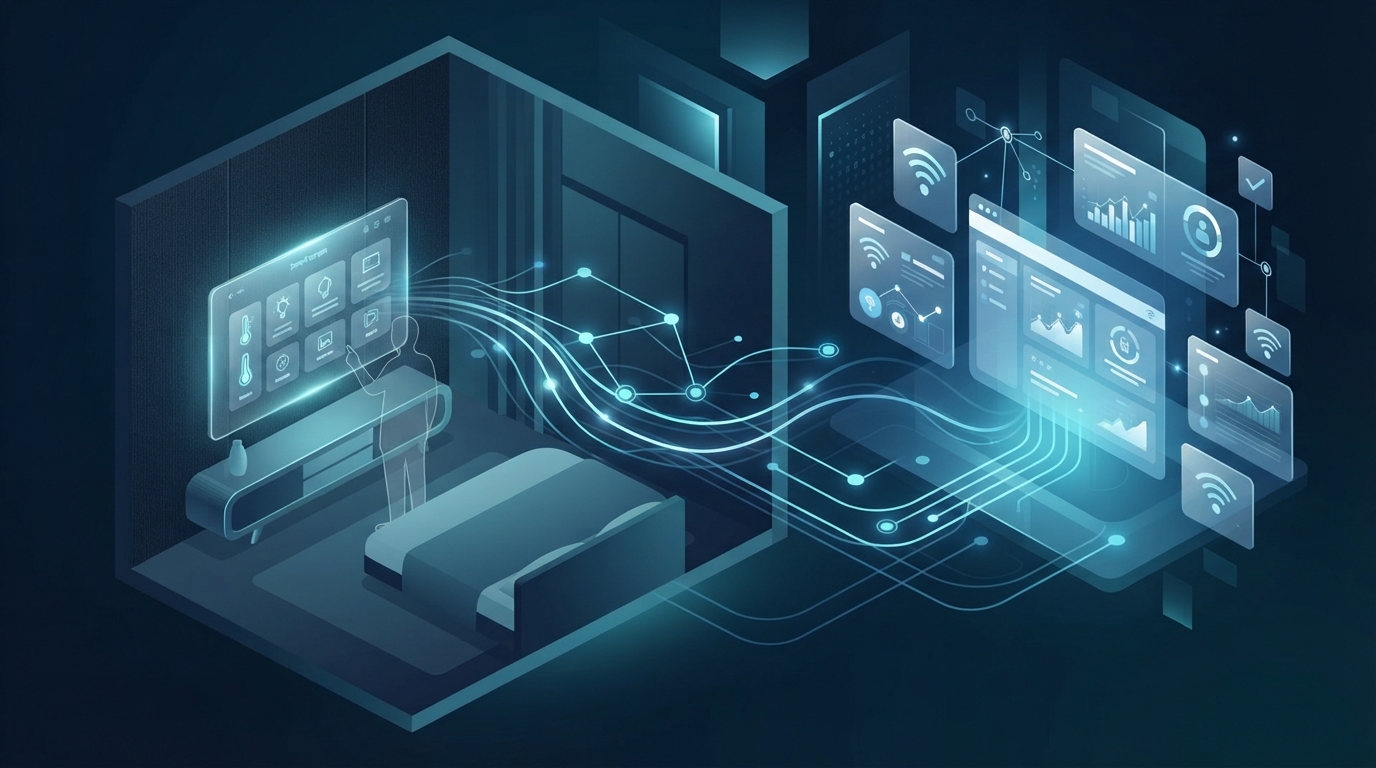
Digitizing the guest experience in the tourism and hospitality industry plays a critical role in increasing operational efficiency. In this context, Sectoral Software Solutions offered within the scope of services strengthen the infrastructure of accommodation facilities. For businesses to accelerate their tourism digital transformation processes, hardware and software layers must work harmoniously. In this technical guide, we discuss how the building blocks of in-room displays and guest portal can be integrated with hotel software .
1. Infrastructure Analysis and Requirements Definition
The first step of the integration process is the evaluation of the existing network infrastructure and system integration capacity. A robust network topology is essential for in-room hardware to communicate with central servers and cloud-based hotel software .
Network and Hardware Preparation
- Inspection of the existing IP TV or smart display infrastructure.
- Optimization of Wi-Fi and wired network bandwidth.
- Compatibility testing of API protocols for .
2. Guest Portal Interface and Service Design
Enabling guests to access hotel services through the screens in their rooms is at the center of tourism digital transformation goals. Interface design should prioritize the user experience and provide fast access.
- Service Requests: Direct transmission of requests such as room service, housekeeping, and technical support to backend systems.
- Information Displays: Dynamic updating of content such as on-site events, restaurant menus, and local guides.
3. Data Flow with Hotel Management Systems
The effective operation of in-room displays relies on the two-way data bridge established with hotel software . As soon as the guest completes the check-in process, the welcome screen on the guest portal is personalized and session security is ensured.
4. Sample Scenario: Implementation of Smart Room Integration
In this section, we discuss a hypothetical system integration scenario implemented in a 250-room resort. As soon as the guest enters the room, the hotel software synchronized with the PMS system is triggered via the API layer. The smart display in the room shows a special welcome message in the guest's preferred language, and the guest portal becomes active. When the guest makes a dinner reservation through the screen, this request is instantly transmitted to the relevant restaurant's POS system, and the bill is directly charged to the room account. The biggest technical trade-off encountered in this process is the balance between real-time data synchronization and network bandwidth consumption. Network load has been minimized by using the WebSocket protocol instead of continuous polling. In the error management scenario, when the connection with the central server is lost, the displays are configured to switch to local cache mode, ensuring that essential hotel information continues to be served without interruption. This application has reduced operational errors by 35% in tourism digital transformation processes and increased guest satisfaction.
5. Detailed Implementation Checklist
Steps to consider for a successful sectoral digital transformation project should be followed with a structured checklist. This list includes critical thresholds from hardware installation to end-user testing. Project teams are advised to adhere to Sectoral Software Solutions standards at every stage. The main headings of the checklist are as follows: Securing the network infrastructure with VLAN separations, establishing API authentication mechanisms (OAuth 2.0) with hotel software , completing remote management and firmware update tests for in-room displays, activating GDPR and KVKK-compliant data deletion protocols (cache clearing after guest check-out), and performing load testing to verify concurrent request capacity. Complete implementation of these items prevents potential security vulnerabilities and guarantees the sustainability of the system.
Sources
- Sectoral Software Solutions — Cy Logic Software