Digital Marketing and Lead Management Architecture in Service Businesses
Processing and management of lead data from digital marketing campaigns for service businesses using web-based applications.
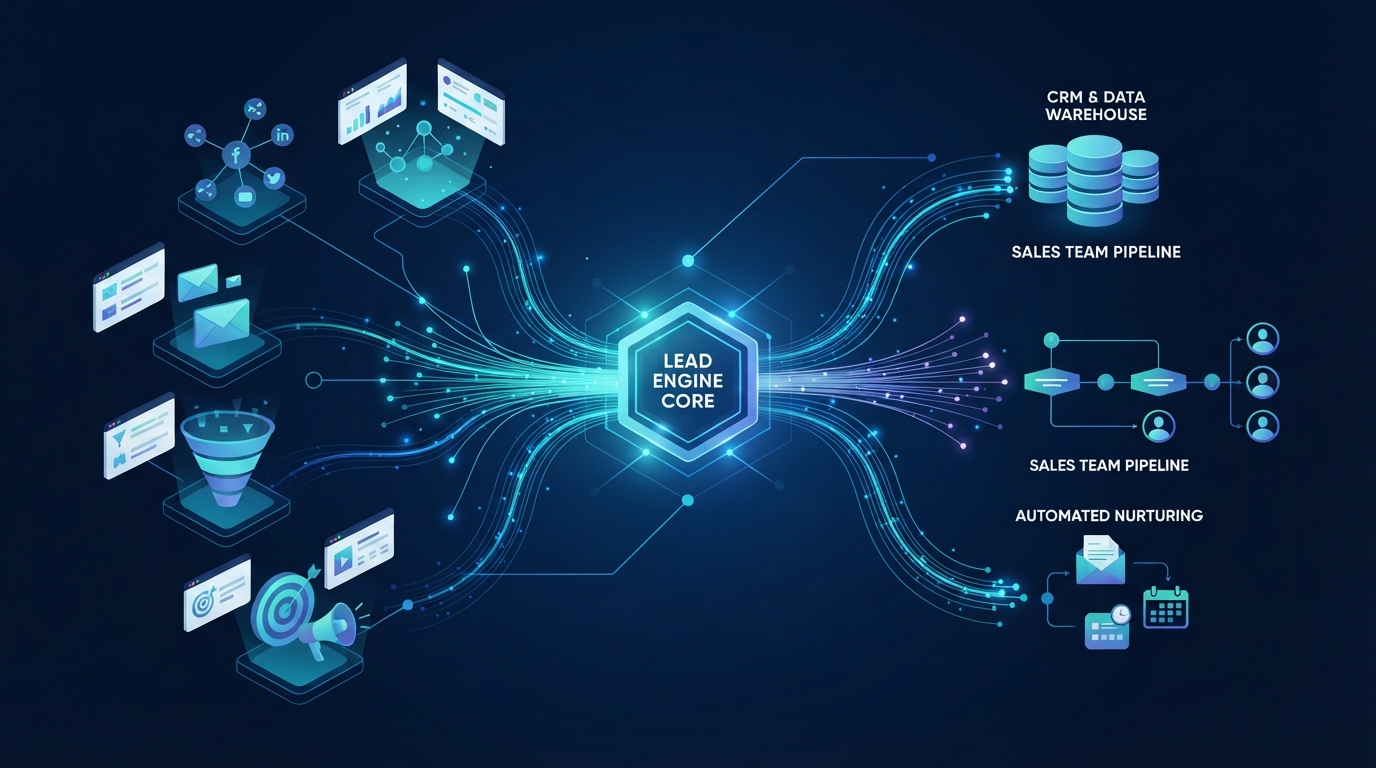
Service businesses must maximize the efficiency of their activities across online channels in line with their growth objectives. In this context, the qualified processing of prospective customer data acquired through digital marketing channels is of critical importance. Businesses in the Turkey and TRNC markets are moving away from traditional methods, digitizing their operations, and automating their processes. In this guide, we will examine the technical steps ranging from the collection of potential customer data to its transfer to sales units.
1. Data Collection and the Role of Web Interfaces
The initial contact point for potential customers is generally corporate websites. At this stage, form structures, landing pages, and interactive forms come into play. The accuracy and completeness of incoming data directly affect the success of subsequent processes. Modern architectures built on top of businesses' infrastructure for Web & Mobile Applications ensure that form data is validated in real time and collected securely. This prevents erroneous or incomplete data entries.
2. Campaign Integration and Data Flow
Campaigns conducted across different channels attract heavy traffic to websites. This traffic needs to be gathered in a single center. Thanks to campaign integration, user information originating from social media or search engine advertisements is transferred to backend systems without any loss. Technically, supporting these processes with Web & Mobile Applications solutions allows API-based data transfers to occur securely and synchronously.
3. Lead Management and Automation Processes
Once collected data drops into the system, the lead management process begins. At this stage, data must be qualified, assigned to relevant sales personnel, and tracked for status. Web-based software automates these workflows, minimizing manual intervention. Dashboards developed within the scope of Web & Mobile Applications provide managers with real-time reporting and performance tracking capabilities.
4. Transfer to Sales Processes and Traceability
The final link in the processes is converting the prospective customer into a sale. Transferring lead data from marketing to the sales unit without loss directly improves the customer experience. Integrated software architectures increase operational efficiency by allowing all past interactions to be viewed from a single screen.
5. Hypothetical Case Study and Process Analysis
To materialize how this architecture works in the practical world, let us consider a hypothetical consultancy firm scenario. As a result of the campaigns carried out by the firm in digital media, potential customers are directed to the corporate website. The moment a visitor fills out the quote form developed with the Web & Mobile Applications infrastructure, the system performs two critical operations in the background: First, the entered email and phone number are checked via instant validation services. Second, UTM parameters are captured to tag which campaign it originated from. If an external integration disconnection occurs at this stage, the architecture queues the data in local memory to prevent data loss and automatically completes synchronization when connection is re-established. Thus, while the marketing team tracks budget efficiency flawlessly, the sales department sees qualified lead information on their screen within seconds. The most common error encountered is automation halting due to incorrect phone formats; to prevent this, the system applies regex-based masking on the frontend. In terms of trade-off analysis, while the real-time validation layer slightly increases cost and server load, it reduces operational time losses caused by incorrect data entry to zero.
6. Technical Implementation and Integration Checklist
For the architecture to be deployed flawlessly, following a rigorous checklist is essential. In the first step, it must be ensured that form components are protected with SSL encryption in accordance with Web & Mobile Applications standards. Second, API endpoints need to undergo load testing and response times must be optimized during sudden traffic spikes. In the third stage, it should be verified that data mapping rules are defined completely during the transfer of lead data to sales dashboards. Within the scope of error handling protocols, automated alerting mechanisms must be established for failed API calls, and instant notifications should be sent to the technical team. In the fourth step, logging mechanisms where explicit consent texts are stored in compliance with GDPR and data privacy regulations are activated. Finally, the entire process is tested end-to-end (E2E testing) to measure the time elapsed from filling out the prospect form to the sales representative seeing it on screen. This systematic approach maximizes the return on investment of digital marketing while preventing the accumulation of technical debt.
Sources
- Web & Mobile Applications — Cy Logic Software