Event-Driven Architecture and RabbitMQ Design in System Integrations
A technical guide to optimizing asynchronous data flow in enterprise software, preventing system crashes, and ensuring robust error management.
The Importance of Integration in Enterprise Software
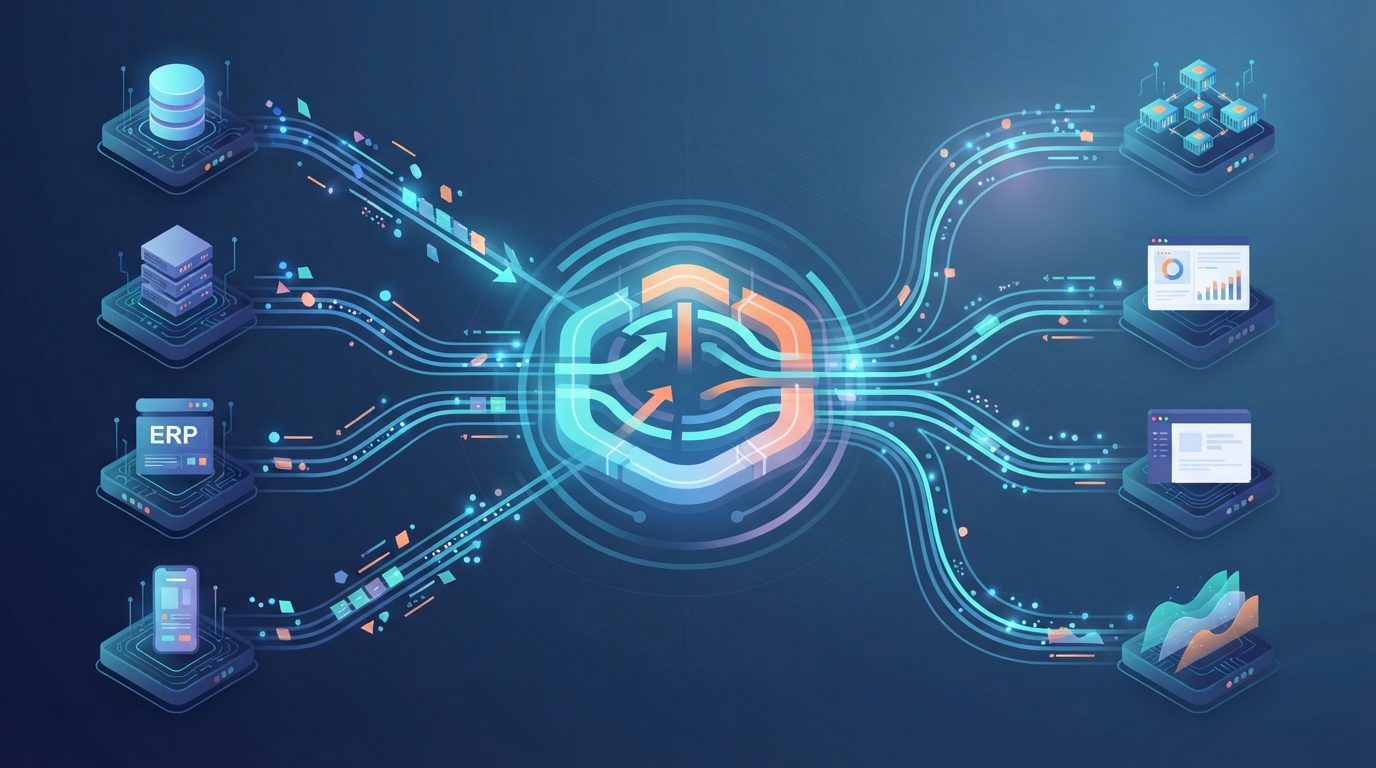
In modern businesses, the seamless operation of different software components together is a critical requirement. Examined under the title of System Integrations, these processes involve establishing a reliable data flow among ERP, accounting, payment systems, SMS, e-mail, and other third-party services. Distributed Systems, which replace monolithic structures, make it mandatory to build inter-component communication on a solid foundation. Asynchronous architecture, which comes into play at this point, plays a key role in preventing system crashes while regulating data traffic.
Asynchronous Architecture and Queue Management
Synchronous communication protocols can cause the requesting service to block while waiting for a response. A temporary slowdown or outage in the target system can halt the entire workflow. The asynchronous architecture approach eliminates this dependency. The producer service leaves the data in a message queue instead of sending it directly to the target system. The consumer service, on the other hand, retrieves and processes this message from the queue according to its own throughput capacity.
Message Queue Configuration with RabbitMQ
RabbitMQ is one of the widely preferred tools among message brokers. When designing [system integration] processes using RabbitMQ, the core layers that need attention are as follows:
- Exchange Definition: Routing rules that determine which queues incoming messages will be forwarded to. The correct exchange type (direct, topic, fanout) must be selected.
- Queue Durability: Marking queues and messages as durable against server restarts prevents data loss.
- Acknowledgement Mechanism: The server must be notified (manual ack) that the message has been successfully processed by the consumer; otherwise, the message must be returned to the queue.
Webhook Integrations and Instant Notifications
Webhook structures are frequently used for data exchange between internal systems and external web services. A webhook is a callback mechanism that triggers HTTP POST requests to the target system's URL address when a specific event occurs. Compared to traditional polling methods, it minimizes resource consumption.
Security and Validation in Webhook Design
To ensure the security of HTTP requests coming from an external system, the following steps should be followed:
- Request Signing: The sender side must sign the payload with a secret key and transmit it in the HTTP header.
- Timestamp Control: The validity period of requests must be checked to prevent replay attacks.
- Idempotency: The same webhook notification may arrive multiple times due to network errors. The system must include unique key (uuid) mechanisms to prevent duplicate processing of the same data.
Error Management and Retry Strategies
The weakest link in complex integration errors is faulty network connections or temporary service outages. A comprehensive error management strategy directly increases system resilience.
- Dead Letter Exchange (DLX): Messages that cannot be processed or exceed a specific retry limit should be routed to a separate DLX queue for manual inspection or logging.
- Exponential Backoff: Failed HTTP requests or queue consumptions should not be repeated immediately one after another. Waiting times should be increased exponentially (e.g., 2s, 4s, 8s).
Rigorous implementation of these technical steps ensures the safe and uninterrupted transfer of corporate data.
Sample Scenario: E-Commerce and Payment System Integration
Suppose an e-commerce platform works integrated with an external payment system and billing service during the order creation process. When the user completes the order, the order service publishes an event indicating that the order was successfully created to a RabbitMQ topic exchange structure. At this stage, the payment service consumes the relevant message and initiates the credit card charge transaction. If the payment service experiences a temporary network outage or database slowdown, the message acknowledgement mechanism (manual ack) kicks in, and the message is automatically considered unprocessed. By applying the exponential backoff strategy, the consumer service retries the transaction at specific incremental intervals (at 2, 4, and 8-second intervals). Thus, even if the external system experiences momentary congestion, the order data is not lost and is safely held in the queue asynchronously without blocking the flow. Faulty data packets that reach the maximum retry limit and still cannot be resolved are directly transferred to the Dead Letter Exchange (DLX) queue and isolated for manual review by system administrators.
Application Checklist and Architectural Validation
Before moving RabbitMQ-based event-driven architectures to the live environment, there is a critical checklist that the technical team must review. First, it must be ensured that all exchange, queue, and binding definitions are versioned in the codebase (Infrastructure as Code). Second, it must be verified that queues and transmitted messages are made persistent against server crashes using durable parameters. In the third stage, it should be tested that the manual acknowledgment mechanism is active and security limits are set against automatic requeue loops in case of errors. In the fourth step, timestamp and request signing (HMAC) controls must be made mandatory at the software layer to prevent replay attacks in webhook or API integrations. Fifth, it must be verified with load tests that duplicate records are prevented by using idempotency keys in database operations. Finally, to catch potential bottlenecks in system integrations early, RabbitMQ management panel metrics and DLX queue volumes must be monitored 24/7 with Prometheus and Grafana tools.
Sources
- System Integrations — Cy Logic Software