E-Commerce Finance and Accounting Integration: Automatic Data Flow Architecture from Order to Ledger
A guide to preventing manual errors in e-commerce businesses by automatically integrating order, return, and payment processes with financial software.
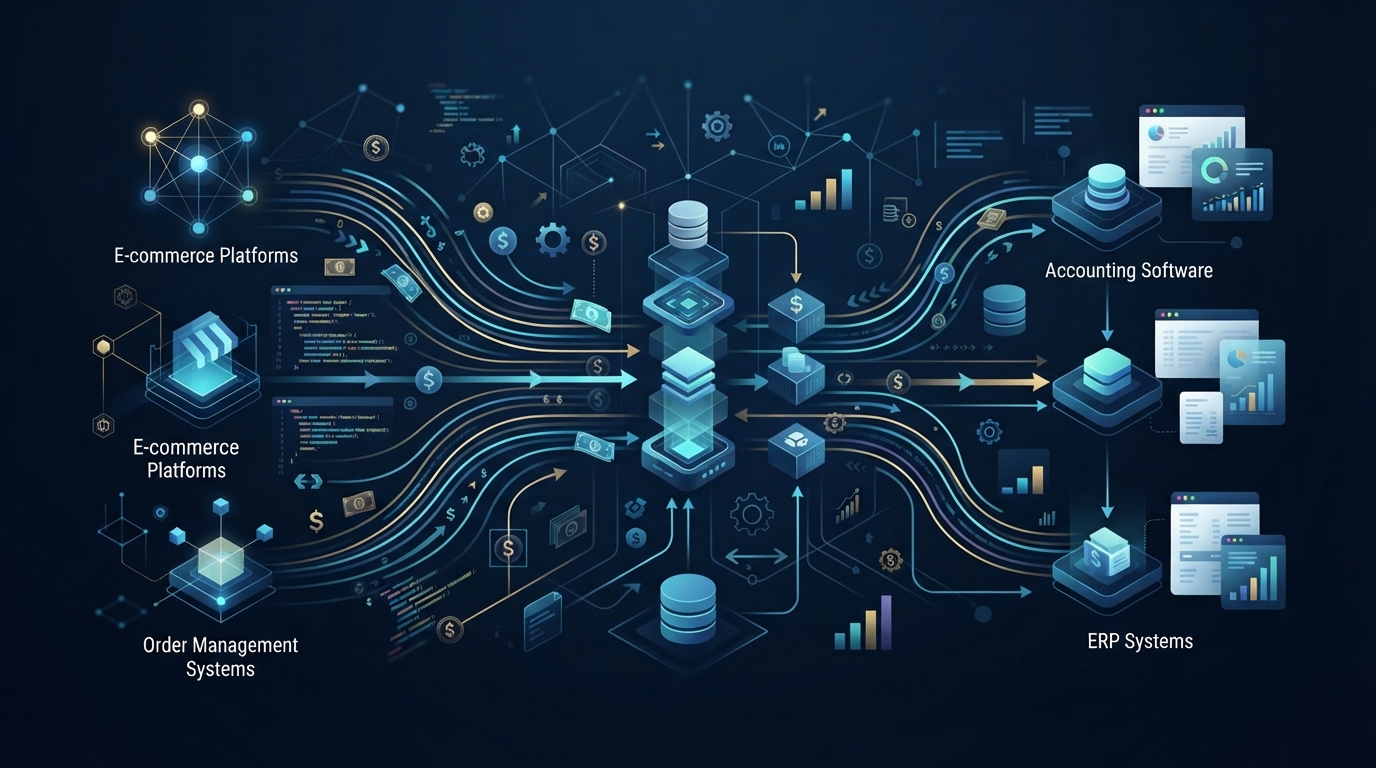
Growth in e-commerce operations proportionally increases the backend data load as order volume scales. For businesses in Turkey and Northern Cyprus, accounting processes based on manual data entry can lead to serious reconciliation errors in addition to wasted time. Therefore, e-commerce finance integration is a critical technical infrastructure component for operational sustainability. In this guide, we will examine how to design a seamless data flow from the moment of order to the ledger.
Order Data Flow and Integration Fundamentals
Matching orders from e-commerce platforms with backend financial software forms the backbone of the entire process. The order data flow, which begins the moment a customer completes cart approval, must be blended with payment providers' reconciliation reports. The core technical steps to consider at this stage are:
- API-Based Connection: Real-time data transfer is established by setting up a RESTful API or webhook architecture between marketplaces, e-commerce sites, and financial modules.
- Return and Cancellation Scenarios: Reverse-direction flow rules must be defined to accurately reflect not only successful sales but also returned and cancelled orders in accounting records.
- Payment Intermediary Reconciliation: Commissions and deductions from different payment channels such as credit cards, cash on delivery, or bank transfers must be automatically separated.
Error Prevention with Accounting Automation
Manual data entry can cause inconsistencies in financial statements and delays in tax return processes. When accounting automation is activated, invoicing and legal ledger processing steps take place independently of human intervention. The system processes data coming from the e-commerce platform directly into the Finance & Accounting Systems infrastructure and automatically records tax rates, shipping costs, and commission deductions to the relevant offsets.
Instant Financial Analysis Infrastructure Setup
Thanks to Finance & Accounting Systems , which allow business managers to instantly analyze the company's financial status, cash flow and profitability ratios can be tracked with second-by-second updates. A properly established integration architecture provides managers with the following advantages:
- Instant tracking of daily turnover and net profit margin,
- Simultaneous comparison of inventory costs with sales revenues,
- A reliable data pool for future cash flow projections.
Detailed Implementation Checklist and Success Criteria
There are steps that technical teams and financial advisors must fully complete before launching the e-commerce finance integration project. This checklist is designed to minimize operational risks and prevent potential data inconsistencies: * **API Authentication and Security:** OAuth 2.0 or secure token-based authentication protocols must be configured for all marketplace and payment institution connections. * **Tax and VAT Matrix Definitions:** It must be tested that VAT rates, which vary according to product categories, match the correct tax codes in the Finance & Accounting Systems infrastructure. * **Error Management and Notification Mechanism:** An infrastructure must be established that sends instant alerts to the technical team via email or messaging in cases such as API disconnections, missing customer information, or invalid tax numbers. * **Reconciliation Tests:** Before the first live data flow, simulations should be performed using historical sample data to verify that the reported turnover matches the accounting records one-on-one. Meticulously applying these steps eliminates potential audit risks while providing businesses with a reliable financial data pool.Sources
- Finance & Accounting Systems — Cy Logic Software