Custom Software Development and Architectural Decisions in E-Commerce
A technical integration and custom software development guide for complex workflows that exceed the limits of off-the-shelf e-commerce infrastructures.
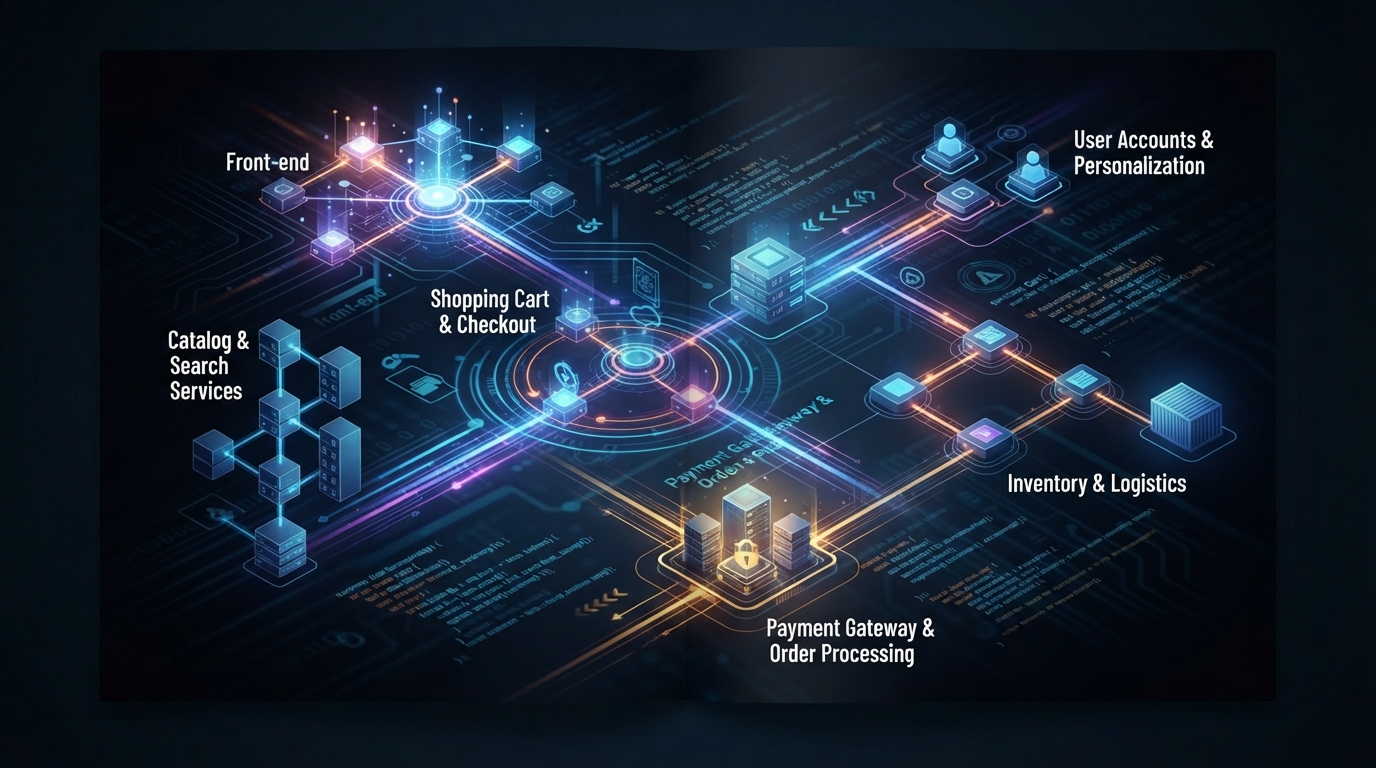
As e-commerce operations grow, standard software solutions begin to fall short at certain points. These bottlenecks encountered during the growth phase of businesses make taking the right strategic steps mandatory. In this technical guide, we will examine Custom Software Development processes and architectural approaches implemented by moving beyond off-the-shelf packaged solutions.
Limits of Packaged Solutions and Needs Analysis
Standard e-commerce infrastructures offer practical starting points for standard sales scenarios. However, as business models become more complex, packaged solutions become inflexible in areas such as multi-warehouse management, custom discount engines, or sector-based business rules. The packaged solution vs. custom software evaluation made at this stage determines the long-term technical roadmap of the business.
Core Criteria in the Decision Process
- Incompatibility of existing operational processes with standard software
- Integration costs of custom business logic
- Scalability potential of the system under high traffic
Architectural Decisions in E-Commerce Infrastructure
When designing an e-commerce infrastructure built from scratch or on top of existing systems, making the right architectural decisions is of vital importance. Transitioning from monolithic structures to microservices architectures prevents system crashes, especially during peak campaign periods.
Data Flow and Microservice Approach
In custom projects, it is essential that payment systems, inventory management, customer relations, and order processing modules operate independently of each other. This approach prevents a failure in one component from stopping the entire system.
System Integration and Process Management
E-commerce sites must continuously exchange data with ERP systems, shipping companies, accounting software, and marketplaces. A successful system integrationrelies on the secure and fast operation of API layers. Businesses hampered by the API limitations of ready-made solutions can establish their own data protocols and flexible web hook mechanisms thanks to custom software.
Conclusion and Summary
The transition to custom software processes must be carefully managed in terms of cost and time planning. To build a flexible and secure structure aligned with your business's growth goals, you can get detailed information from our Custom Software Development service.
Hypothetical Scenario: Multi-Warehouse and Dynamic Pricing Management
This theoretical scenario clearly demonstrates the points where standard e-commerce software fails and how a Custom Software Development approach saves the day. Operating high-volume retail operations, a fictional business named "Anadolu Tedarik" has eight different logistics centers across Turkey and instantly changing B2B/C pricing rules. When using a standard e-commerce package, the algorithm determining which warehouse will ship the product at the time of the order remained dependent on external service integrations, causing delays during sudden campaign traffic. When the business wanted to resolve stock reservation at the database level with a lock mechanism at the moment of the order, it could not intervene in the database schema of the packaged products. This situation led to overselling and customer dissatisfaction. Thanks to the developed custom microservice architecture, each warehouse was designed as an independent node and a Redis-based distributed lock mechanism was integrated. The dynamic discount engine, on the other hand, can perform calculations in milliseconds based on product combinations in the cart. The biggest trade-off encountered during this architectural shift was the multiplied development costs and initial setup time. However, the system's zero-downtime operation on busy days like Black Friday ensured that this cost was quickly amortized with operational gains. On the error management side, thanks to fallback queues activated when external shipping APIs fail, no order records were lost, and process security was maximized with asynchronous structures.
Implementation Checklist for a Successful Custom E-Commerce Project
Success in complex e-commerce projects depends on the flawless auditing of technical details. Before starting the Custom Software Development process and during the go-live phase, the following items must be meticulously completed:
- [ ] Business requirements analysis and clarification of monolithic and microservices boundaries
- [ ] Determination of sharding and indexing strategies against write-heavy scenarios in database design
- [ ] Establishment of idempotent transaction mechanisms for payment gateways
- [ ] Implementation of the Circuit Breaker pattern in external ERP, CRM, and shipping integrations
- [ ] Simulation of load testing with realistic traffic scenarios (e.g., sudden campaign surges)
- [ ] Deployment of automated error tracking, logging, and centralized monitoring tools
- [ ] Completion of security tests (OWASP Top 10) and validation of sensitive data encryption protocols
This checklist minimizes critical points that might escape the development team's notice. In error management strategies, especially during third-party service outages, the system should operate on the principle of graceful degradation. For instance, if the recommendation engine goes out of service, the main cart and checkout flow must not be disrupted, and user experience should be maintained with minimal loss. All architectural decisions made throughout the process should be documented to minimize future maintenance costs and technical debt.
Sources
- Custom Software Development — Cy Logic Software