Cloud vs. Self-Hosting Decision: Enterprise Infrastructure with PostgreSQL and Docker
Examine cloud and self-hosting decisions step-by-step for businesses in Turkey and Northern Cyprus, using PostgreSQL and Docker enterprise architecture principles.
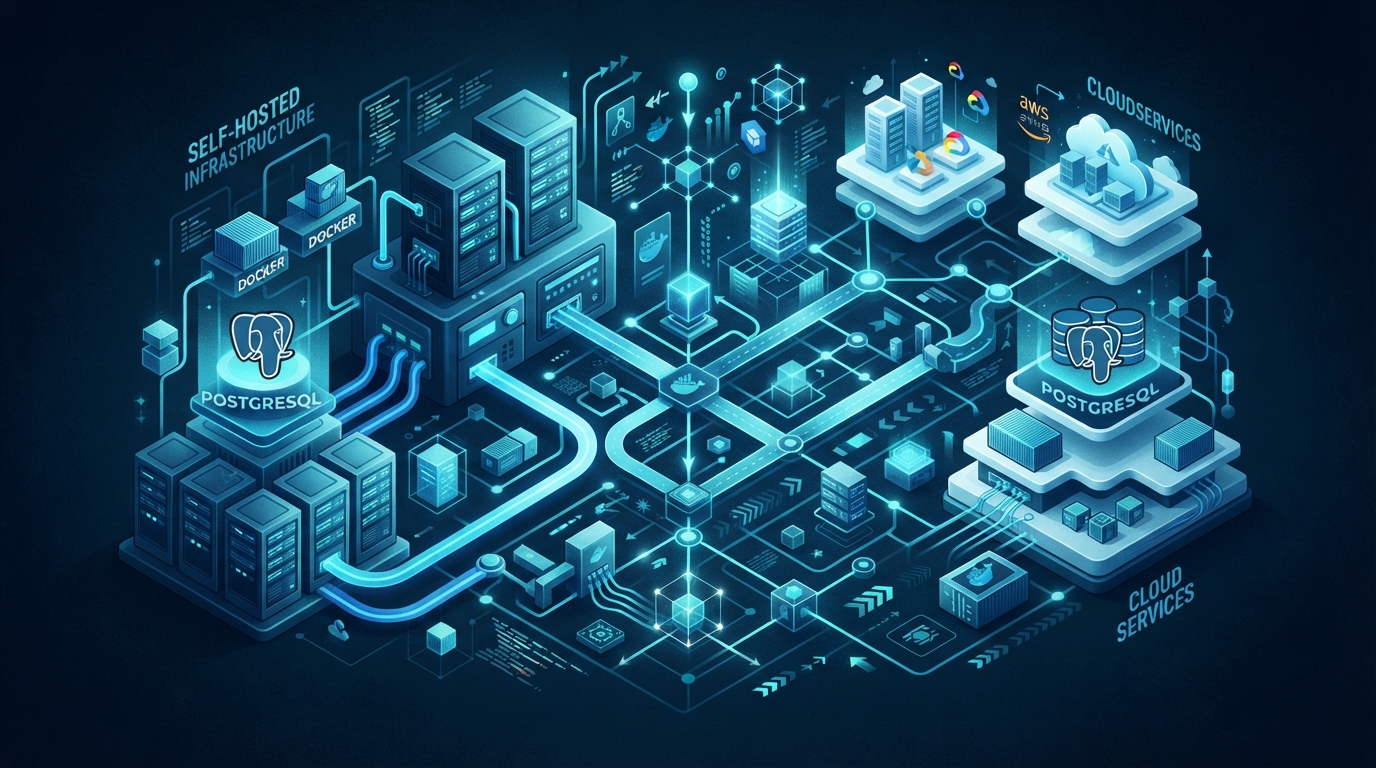
For medium-sized enterprises in Turkey and Northern Cyprus, one of the most critical thresholds in technology investments is determining the data hosting strategy. When choosing between on-premise server hosting, known as self-hosting, and cloud providers, architectural and operational criteria must be meticulously addressed. In this technical guide, we will examine the operational dynamics of systems built with Linux, Docker, Nginx, and PostgreSQL components.
Infrastructure Needs Analysis and Data Sovereignty
Where businesses store their data during growth processes is decisive not only for costs but also for legal compliance and security. Especially for companies operating on a regional scale, data sovereignty ensures that control of sensitive corporate data remains entirely within the institution. As discussed in Server & Cloud Infrastructure services, local or hybrid models directly support corporate data security.
Choosing the Right Hosting Model
It is recommended to evaluate the following factors during the decision phase:
- Data Control: Where data is physically and logically stored.
- Scalability: The system's capacity for flexibility against increasing workloads.
- Maintenance Cost: Hardware, licensing, and operational manpower expenses.
- Security Policies: Measures taken at the network level and access authorizations.
Containerization with Docker Enterprise Architecture
Container technologies are a fundamental element for ensuring consistency in modern software deployments. The Docker enterprise architecture approach eliminates environmental discrepancies during transitions from development to live environments. Running applications in isolated layers shortens debugging times and allows efficient use of system resources.
Nginx and Network Traffic Management
As the gateway of the server infrastructure to the outside world, Nginx assumes reverse proxy and load balancer roles. Securely routing incoming requests to relevant Docker containers, performing centralized SSL/TLS certificate management, and caching static files directly enhance system performance.
PostgreSQL Infrastructure and Data Management
Database management, forming the backbone of enterprise applications, requires high availability and data integrity. In the PostgreSQL infrastructure setup, optimizing database performance, automating regular backup strategies, and keeping authorization layers tight are of vital importance. Within the scope of Server & Cloud Infrastructure, structures supported by modern tools such as Supabase self-hosting reliably meet the data needs of modern web and mobile applications.
Operational Continuity and Maintenance
In the phase following the commissioning of the system, cloud and server management require continuity. By establishing log monitoring tools, resource utilization metrics, and automated update mechanisms, potential disruptions can be prevented. Technical guidance and infrastructure solutions provided by Cy Logic Software lay the groundwork for businesses to manage these processes flawlessly.
Hypothetical Scenario: Three-Tier Architecture and Error Management
In this section, we will cover a fictional scenario of a three-tier enterprise application positioned in a local data center and managed with Docker. In our scenario, while Nginx acts as a reverse proxy on the front end, application services run on a private Docker network, and data is stored on PostgreSQL. How the system reacts during a database outage is a critical trading point. If the main PostgreSQL container crashes due to a sudden memory leak, the Docker daemon triggers the process with an automatic restart policy. However, incoming requests during this restart duration may be met with a temporary error page by Nginx. Health check mechanisms must be activated for failure management in such scenarios. The most common trade-off encountered in live environments is accepting single server dependency to avoid high availability costs. To provide top-tier flexibility, system administrators should transfer backup scripts to external storage units every night via cronjobs. Such scenarios planned within the scope of Server & Cloud Infrastructure solutions aim to minimize potential data losses and mandate the testing of disaster recovery scenarios.
Installation and Deployment Checklist
Implementing a comprehensive checklist before deploying the system to the live environment minimizes operational risks. As a first step, Linux kernel parameters and file descriptor limits on the server should be optimized for high concurrent connections. Secondly, it must be ensured that Docker images are pulled from official and reliable sources, and sensitive data must never be written in plain text into docker-compose files; environmental variables should be preferred instead. In the third stage, the currency of SSL/TLS certificates in the Nginx configuration should be checked, and strong encryption protocols must be enabled. For the PostgreSQL database, file system settings that will increase disk I/O performance should be made, and connection pooling tools integrated. At the end of all these steps, performance tests should be run in accordance with Server & Cloud Infrastructure standards, and system logs should be directed to a centralized monitoring tool. This meticulous control process forms the basis for long-term stability and a smooth maintenance cycle.
Resources
- Server & Cloud Infrastructure — Cy Logic Software